
How AI Is Changing Bookkeeping (And What That Means for You)

Every generation of business owners hits a moment where the tools change.
Ledger → spreadsheet → accounting software → now AI.
And this shift is happening faster than most realize.
Over the past year, I’ve had a surge of conversations around AI and bookkeeping. The questions are consistent:
Should I be using this?
Is it accurate?
Is it safe?
And underneath it all… is my bookkeeper being replaced?
Short answer: no—but the role is evolving.
What AI Is Actually Doing in Bookkeeping Right Now
Let's start with what's real — because a lot of what gets called "AI" in the financial software space is genuinely impressive, and a lot of it is marketing language wrapped around fairly basic automation. Here is what AI is actually doing in bookkeeping tools today:
Automatic transaction categorization. QuickBooks, Xero, and other platforms now use machine learning to analyze your transaction history and automatically suggest — or apply — categories to new transactions. The more history the system has, the more accurate it becomes. For a business with consistent, predictable expenses, this alone can save hours of manual categorization every month.
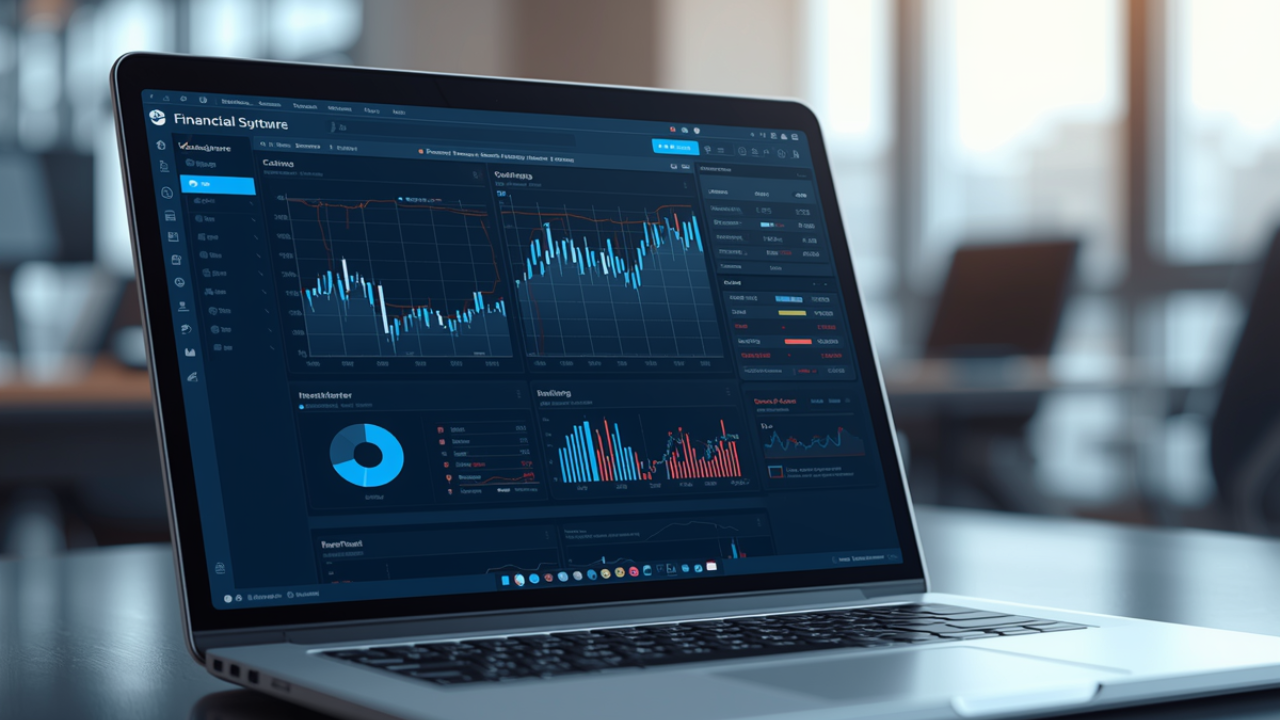
Receipt and document data extraction. Tools like Dext and Hubdoc use AI to read receipts and invoices — extracting vendor names, amounts, dates, and tax information automatically. What once required manual data entry now happens in seconds with remarkable accuracy.
Anomaly detection. AI can now scan your books and flag unusual transactions — duplicate payments, unexpected charges, transactions that fall outside your normal patterns. It's like having a second set of eyes on your finances that never gets tired and never misses a line.
Cash flow forecasting. Several platforms now offer AI-powered cash flow projections — analyzing your income and expense patterns to forecast what your cash position will look like 30, 60, or 90 days from now. For a business owner managing tight cash flow, that kind of forward visibility is genuinely game-changing.
Automated reconciliation suggestions. AI can now match bank transactions to accounting records with high accuracy — dramatically reducing the time required for monthly reconciliation and flagging the exceptions that need human review.
Conversational financial queries. Some platforms now allow you to ask plain-English questions about your finances — "What did I spend on marketing last quarter?" or "How does my revenue this month compare to last year?" — and receive instant, accurate answers pulled directly from your books.
What AI Cannot Do — And Why That Matters
Here is where I want to slow down and be genuinely honest with you. Because in the rush to celebrate what AI can do, the financial industry has been remarkably quiet about what it cannot.

AI cannot exercise judgment. It can categorize a transaction based on patterns. But it cannot know that the dinner you expensed last Tuesday was a legitimate client meeting — or a personal meal that accidentally landed in the wrong account. It cannot know that the equipment purchase you made in December was a strategic year-end tax decision — or an impulsive buy that needs to be reclassified. Judgment requires context. Context requires a human being who knows your business.
AI cannot catch what it wasn't trained to look for. Machine learning models are extraordinarily good at identifying patterns they've seen before. They are remarkably poor at identifying problems they've never encountered. Novel errors, unusual transactions, and edge cases — the exact situations that matter most — are precisely where AI is most likely to miss something.
AI cannot interpret your financial story. Your books are not just a record of transactions. They are the financial narrative of your business — one that tells a story about where you've been, where you are, and where you're headed. Reading that story, interpreting what it means for your specific situation, and translating it into actionable guidance requires a human mind, genuine experience, and a relationship built on trust.
AI cannot be held accountable. When the IRS sends a notice, the software doesn't get the call. When a financial decision turns out to be wrong, the algorithm doesn't sit across the table from you and help you figure out what went wrong and how to fix it. Accountability — the kind that matters when the stakes are real — still belongs to people.
AI cannot replace wisdom. And in my experience, wisdom is what business owners need most from their financial professionals. Not just accurate numbers — but someone who has seen enough situations, across enough businesses, to know what the numbers mean and what to do about them.
The Honest Opportunity — And the Honest Risk

I believe AI represents a genuine opportunity for small business owners — one I am actively embracing in my own practice. When AI handles the mechanical, repetitive tasks of bookkeeping — data entry, categorization, reconciliation matching, document extraction — it frees up the human professionals working alongside you to do what machines genuinely cannot: think, advise, interpret, and guide.
That is a good thing. It means your bookkeeper spends less time entering data and more time reviewing it. Less time reconciling line by line and more time asking what the numbers mean for your business. Less time on the mechanical and more time on the meaningful.
But there is also a real risk — and I would be doing you a disservice not to name it plainly.
The risk is that business owners mistake automation for oversight.
AI tools are increasingly capable of producing books that look accurate without being accurate. Transactions get miscategorized by confident algorithms. Subtle errors compound quietly over months. And a business owner who assumes the software is handling everything — who never has a human being review the work — can end up in a very difficult position come tax season or audit time.
The goal of AI in bookkeeping is not to eliminate human oversight. It is to make human oversight more efficient and more focused. The human still matters. The relationship still matters. The judgment still matters.
What This Means for Your Business Specifically
Here is the practical takeaway I want you to carry from this conversation:
Embrace the tools. If your current bookkeeping setup doesn't include AI-powered automation — automatic categorization, receipt capture, reconciliation assistance, cash flow forecasting — you are working harder than you need to and almost certainly missing things you shouldn't be missing. The tools are mature, they are affordable, and they are worth implementing.
Don't mistake the tools for the professional. The software is not your bookkeeper. It is your bookkeeper's tool. The difference matters — especially when something goes wrong, when a complex decision needs to be made, or when you need someone who genuinely understands your business to help you navigate a difficult season.
Stay ahead of the curve. AI in financial technology is evolving at a remarkable pace. The business owners who stay curious, stay informed, and work with financial professionals who are actively integrating these tools will have a meaningful competitive advantage over those who don't.
Work with someone who understands both. The most valuable financial professional in 2026 is not the one who resists AI — nor the one who blindly trusts it. It's the one who understands what it can do, what it cannot do, and how to use it as a tool in service of your financial clarity and success.
A Final Word From a Financial Shepherd
I've been thinking about this a lot lately — about what it means to shepherd a business owner's finances in an age of artificial intelligence.
And here is what I keep coming back to:
The shepherd's job was never to do everything himself. It was to know the flock — to understand each one, to anticipate the dangers, to lead with wisdom and care. The tools changed over generations. The responsibility never did.
AI is a powerful tool. In the right hands, used with wisdom and oversight, it makes the work of financial stewardship more accurate, more efficient, and more impactful. But the stewardship itself — the relationship, the judgment, the accountability, the genuine care for the business owner sitting across the table — that belongs to people.
It always has. And it always will.
At Accounting & Computer Concepts, we are actively integrating the best AI-powered tools into our practice — so your books are more accurate, your reporting is more timely, and the time we spend together is focused on what matters most: understanding your numbers, making wise decisions, and building a financial foundation that serves everything you're working toward.
Stay ahead. Work with us.