
Why Profitable HVAC Calls Still Leave You Short on Cash
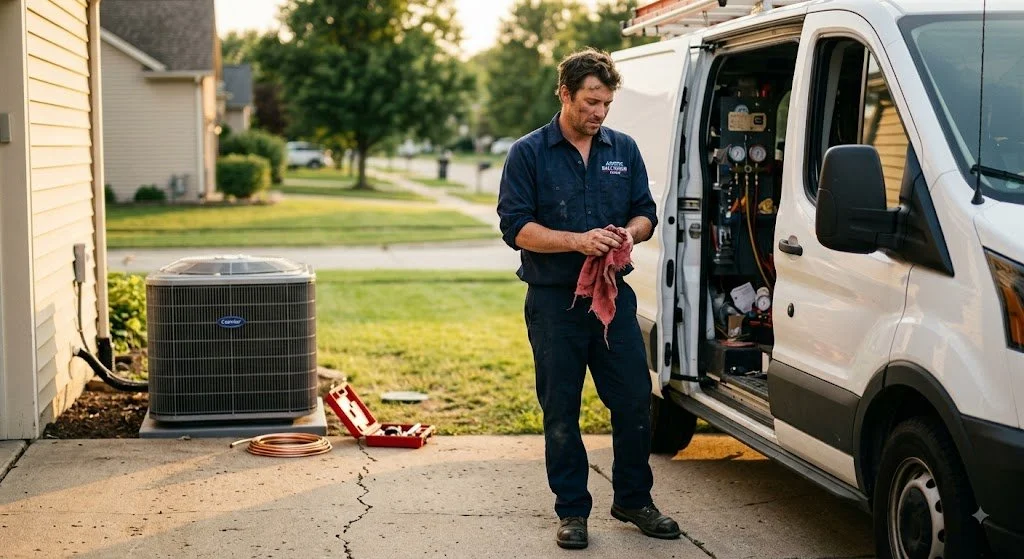
A job well done — but is the cash flow keeping pace?
You finished the install. The customer shook your hand, thanked you, and paid the invoice. On paper, it was a good job — solid margin, no callbacks, crew home by five. So why does your bank account feel thinner than the numbers say it should?
If you run an HVAC business, you already know the strange truth: you can be busy, profitable, and still scrambling to make payroll. A full schedule doesn't always mean healthy cash. And when the gap between "profitable" and "paid" gets wide enough, it starts to keep you up at night.
Let's talk about why that happens — and what you can actually do about it this week.
Busy Isn't the Same as Paid
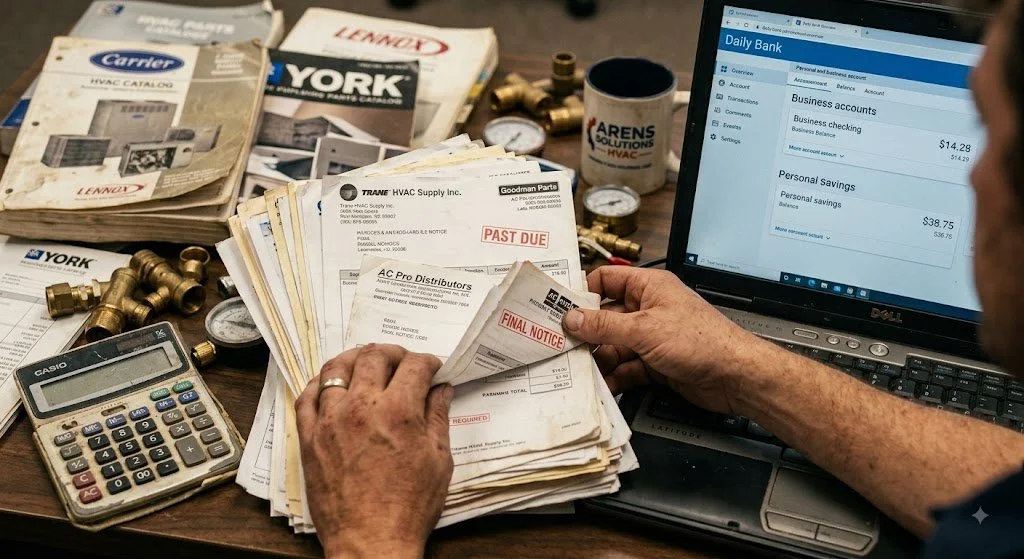
Profit on paper doesn't always mean cash in the bank.
Profit is what's left after you subtract your costs from what you charged. Cash flow is something different: it's the actual timing of money moving in and out of your business. You can have plenty of profit locked up in jobs you've completed and still have very little cash in the bank right now.
For HVAC contractors, three things pull those two numbers apart:
You pay for materials before the customer pays you. A compressor, a new condenser, a full system swap — you're fronting hundreds or thousands of dollars in equipment, sometimes on a credit card, weeks before the invoice clears.
Payroll doesn't wait. Your techs get paid on schedule whether or not your customers have paid theirs. Labor goes out the door every two weeks like clockwork.
Receivables sit. That commercial job with net-30 terms? That's a month of your money sitting on someone else's desk while your bills keep coming due.
Each of these is normal. Together, they create a squeeze that has nothing to do with whether your jobs are profitable — and everything to do with timing.
What Ignoring the Gap Actually Costs You
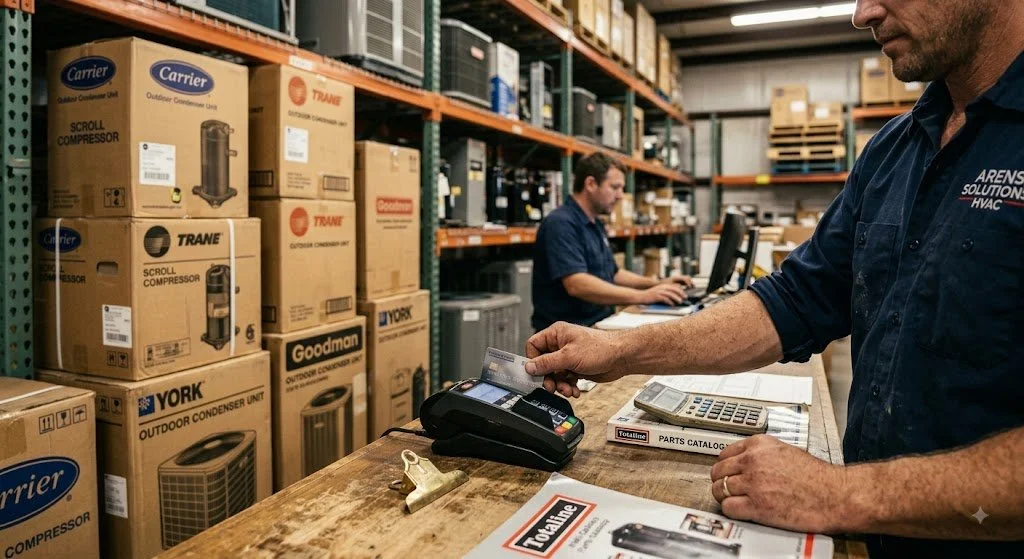
Fronting equipment costs on a card is easy to do — and easy to keep doing.
When cash gets tight, the pressure shows up in ways that quietly hurt the business:
You take a job you'd normally pass on, just to get money in the door.
You delay ordering equipment, which delays the job, which delays getting paid — and now you're chasing your own tail.
You put materials on a card and carry a balance, paying interest on money you already earned.
You stop paying yourself so the crew gets paid.
None of this is a profit problem. It's a visibility problem. Most owners simply can't see what's coming in, what's going out, and what's due next — all in one
place. Without that view, every week feels like a guess.
Five Things You Can Do This Week
You don't need a finance degree to get ahead of this. You need a clearer picture and a few simple habits.
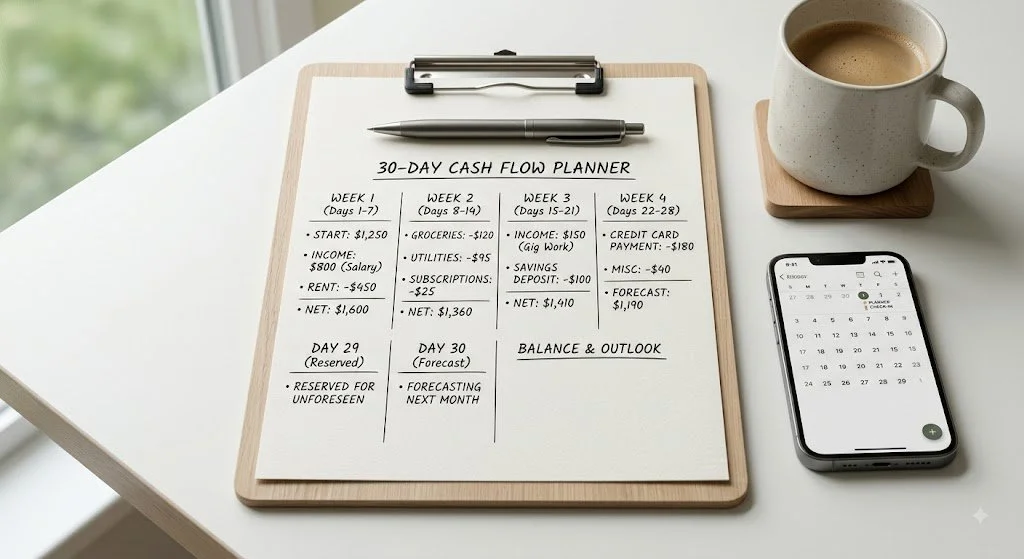
A simple 30-day cash view turns guesswork into a plan.
1. Build a simple 30-day cash view.
On one page, list what you expect to collect over the next 30 days (unpaid invoices, jobs closing soon) and what you have to pay (payroll dates, supplier bills, loan payments, taxes). Line them up by week. The point isn't precision — it's seeing where the tight weeks are before you're in them.
2. Get deposits on equipment-heavy jobs.
If a job requires a major equipment purchase, ask for a deposit that covers the materials up front. This isn't unusual, and most customers understand it. It means you're no longer fronting your supplier's bill out of your own pocket.
3. Invoice the same day the job is done.
The clock on getting paid doesn't start until you send the invoice. A job finished Tuesday but invoiced the following Monday just added a week to your wait — every single time. Make same-day invoicing a rule, not a nice-to-have.
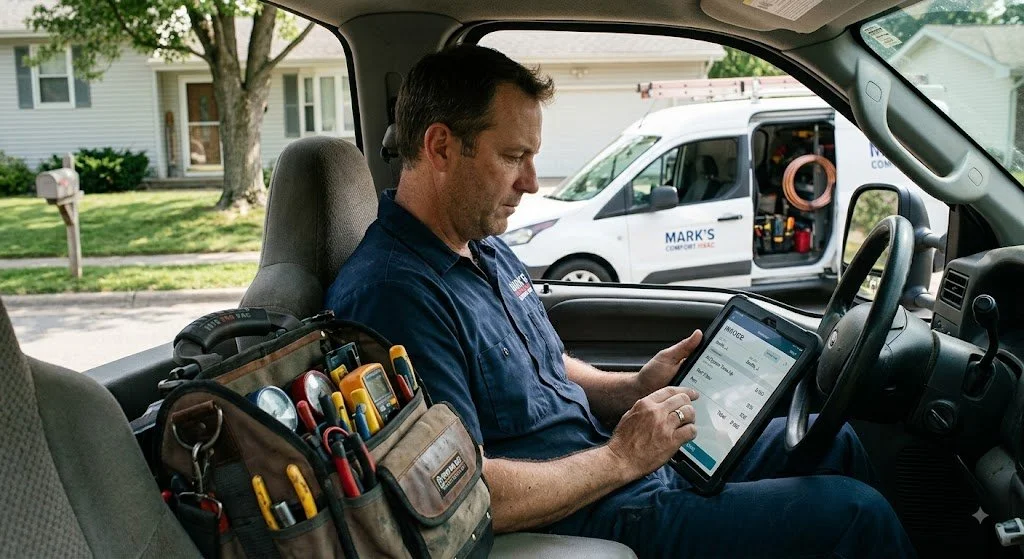
Same-day invoicing starts the clock on getting paid sooner.
4. Watch your receivables like you watch your schedule.
Once a week, look at who owes you and how long it's been. A quick, friendly follow-up on anything past 15 days will pull cash in faster than almost anything else you can do. Most late payments aren't refusals — they're just people who forgot.
5. Separate service cash from install cash in your head.
Quick service calls tend to pay fast and steady. Big installs pay bigger but slower and require more up-front cost. Knowing which type of work is filling your schedule tells you a lot about what your cash will look like next month.
A Quick Example
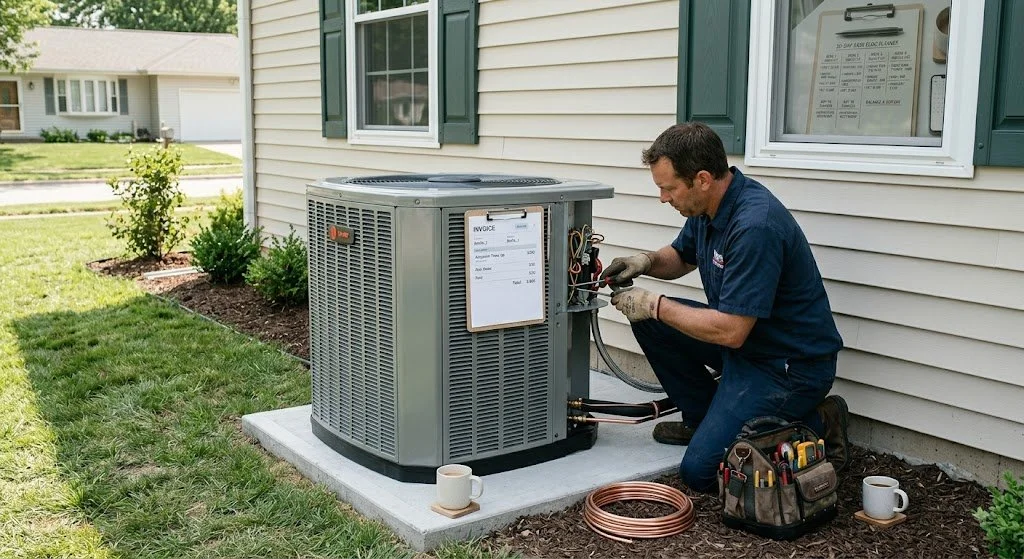
Same profit, different stress level — it all comes down to deposits and invoicing.
Say you close a $9,000 system replacement. The equipment costs you $3,800, which you put on a card the day you order it. Your crew's labor for the two-day job runs another $1,600 in payroll that goes out that Friday. The customer, though, is on 30-day terms.
On paper, that's a healthy job — roughly $3,600 of margin. But for the next month, you're out $5,400 in real cash before a single dollar comes back. Book two or three of those in the same stretch without a plan, and a profitable month can leave you borrowing to cover payroll.
Now run the same job with a 40% deposit and same-day invoicing. You collect $3,600 up front — enough to cover the equipment on day one — and the clock on the remaining balance starts the moment the job wraps. Same profit. Completely different stress level.
The Bottom Line
Your HVAC business can be profitable and still feel broke, and that's not a sign you're doing something wrong — it's a sign your money is moving faster than you can see it. The fix isn't working more jobs. It's getting a clear line of sight on what's coming in, going out, and due next, then adjusting a few habits so cash arrives closer to when you spend it.
You work hard enough in the field. Your numbers should help you make decisions, not add to the stress.
Need clearer numbers for your contracting business? We help contractors set up simple cash flow tracking and job costing so you always know where you stand. Reach out and let's take a look at your numbers together.