
How to Pay Yourself as a Small Business Owner (Without Hurting Your Business)

A clear system starts with knowing your numbers — and knowing what you deserve to be paid.
Let's be honest for a second.
Most small business owners are either paying themselves last — or paying themselves in a way that quietly damages their business finances. You're working 50-hour weeks, running payroll, paying vendors, keeping the lights on… and then hoping there's something left for you at the end of the month.
There's a better way. And it's simpler than you think.
The "Whatever's Left" Trap

If your pay depends on what's left at the end of the month, you don't have a pay system — you have a guessing game.
Here's the most dangerous financial habit in small business: "I'll pay myself whatever is left over."
It sounds humble. It even sounds responsible. But it's actually a recipe for financial chaos — and here's why.
When you have no defined pay structure, you make emotional money decisions. Good month? You overpay yourself and underfund your tax reserves. Slow month? You pay yourself nothing and quietly resent the business you built. There's no baseline, no rhythm, and no real picture of whether your business is actually profitable.
You can't budget your personal life. You can't plan for growth. And your books become a mess of random transfers that make tax time a nightmare.
The fix isn't complicated — but it does require intention.
Owner's Draw vs. Salary: Which One Is Right for You?
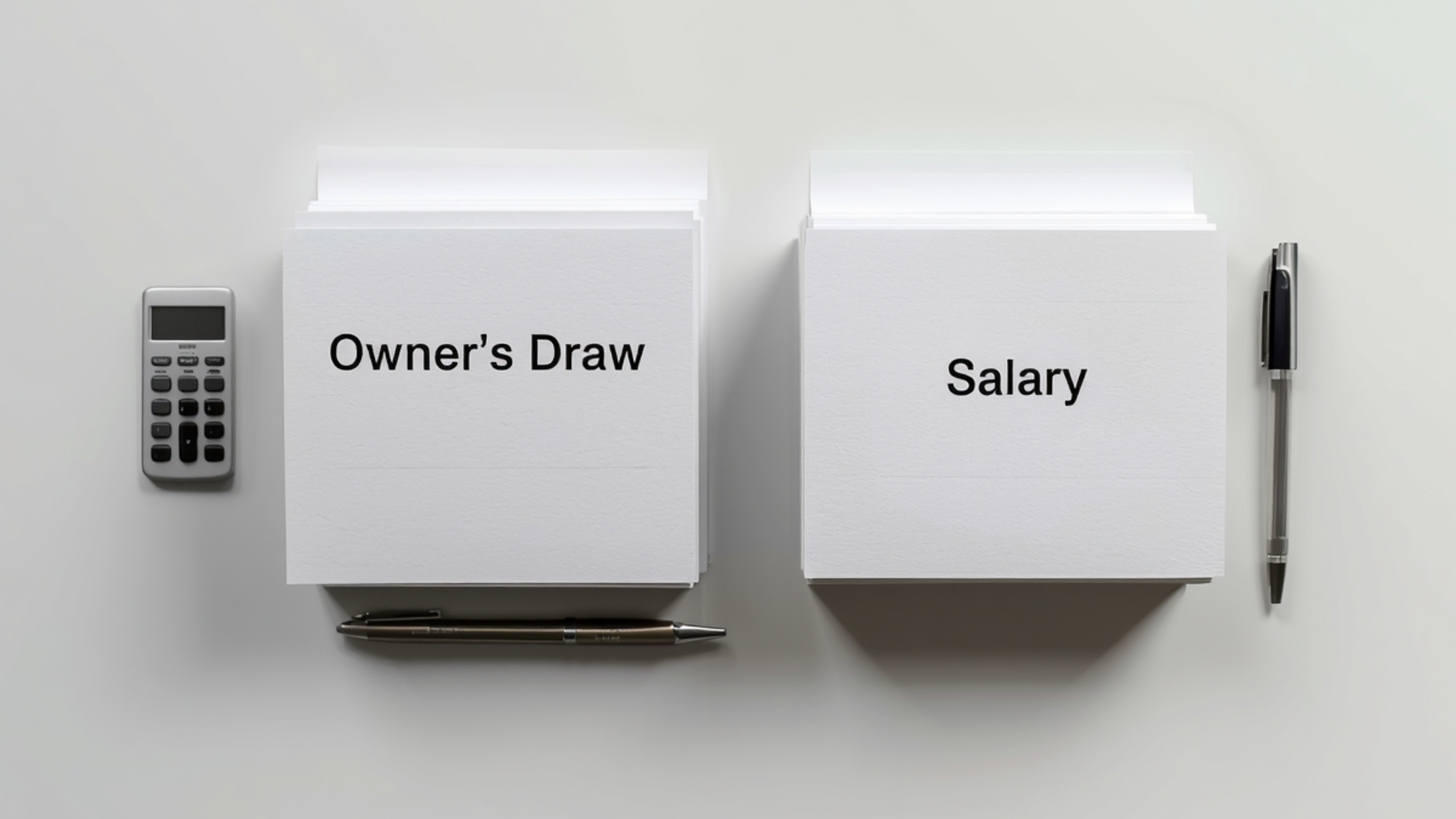
Owner's draw or salary — the right choice depends entirely on how your business is structured.
Before you can build a pay structure, you need to know how you're legally allowed to pay yourself. This comes down to your business entity.
Sole Proprietor or Single-Member LLC — You take an owner's draw, pulling money directly from your business equity. No payroll taxes withheld at the time of the draw, but you'll pay self-employment tax (15.3%) on your net profit at year-end.
Partnership or Multi-Member LLC — Also draws, typically governed by your operating agreement. Each partner pays self-employment tax on their share of profit.
S-Corporation — This is where it gets important. If you're an S-Corp owner who works in the business, the IRS requires you to pay yourself a reasonable salary through payroll before taking additional distributions. Skip this and you're waving a red flag at the IRS.
C-Corporation — You're an employee of your own company. You pay yourself a salary with standard payroll taxes.
Getting this wrong doesn't just create messy books — it can trigger audits and penalties. Know your structure, then build your pay method around it.
How to Calculate a Sustainable Owner's Compensation

Your pay shouldn't be a guess — it should be a calculation rooted in your actual profit margins.
Here's a framework that actually works:
Step 1: Know your real numbers.
Pull your average monthly revenue and subtract your fixed and variable expenses. What remains is your net operating profit — and that's the only pool you should be pulling from.
Step 2: Apply the 50% rule as a starting point.
A healthy benchmark for many service-based businesses: owner compensation shouldn't exceed 50% of net profit. This leaves room for taxes, reinvestment, and a cash buffer. Your margins may allow more or require less — but this is a solid baseline.
Step 3: Set a consistent monthly number.
Don't pay yourself based on what happened to land in your account this week. Set a fixed monthly amount you can sustain even in slower months. Think of it like your business paying you a salary — because that's exactly what it is.
Step 4: Build a tax reserve.
Before that draw hits your personal account, your business should be setting aside 25–30% of net profit for taxes. Paying yourself without reserving for taxes is just borrowing from your future self.
The Tax Implications You Can't Ignore
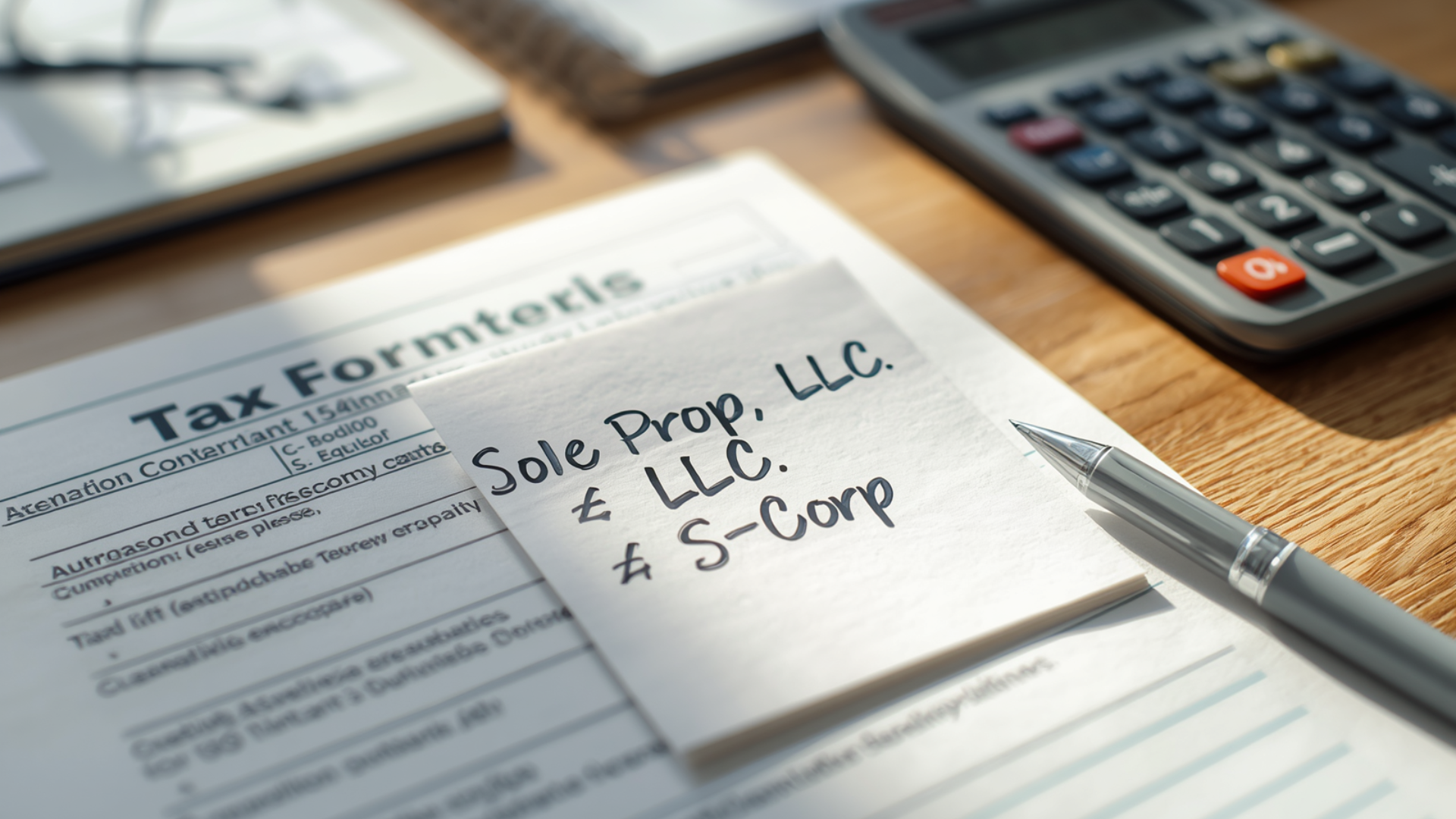
How you pay yourself changes everything about what you owe — and it starts with your entity type.
How you pay yourself directly affects how much you pay in taxes — so this isn't just a bookkeeping decision.
Sole props and single-member LLCs pay self-employment tax on all net profit, whether they drew it out or not. Your personal and business income is the same in the eyes of the IRS.
S-Corp owners can save on self-employment taxes by splitting compensation between a reasonable salary (subject to payroll taxes) and distributions (not subject to SE tax). This is one of the biggest tax advantages of electing S-Corp status — but only if you do it correctly with actual payroll set up.
Quarterly estimated taxes apply to almost everyone in this conversation. If you're not paying them, you're likely underpaying and setting yourself up for a penalty in April.
Talk to your bookkeeper and CPA together on this one. The entity and pay structure decisions you make now have a multi-year tax impact.
Building Your Simple, Consistent Pay Structure

A simple, consistent pay structure gives you clarity, confidence, and a business that actually works for your life.
Here's what a basic, sustainable system looks like in practice:
Reconcile your books monthly so you always know your real profit — not just your bank balance
Set a fixed owner's compensation amount based on your average monthly net profit
Transfer that amount on the same date(s) every month — treat it like a bill your business pays
Keep a separate tax savings account and fund it every time revenue hits
Review your compensation quarterly and adjust as your revenue grows or contracts
Document every draw or payroll payment in your books with the correct category — this matters at tax time
That's it. No guessing. No emotional transfers. No wondering if you "can afford" to pay yourself this month.
You Built This Business — It Should Pay You

You built this business. It's time to build a pay structure that honors that work — and protects it.
The business you're building is supposed to serve your life — not the other way around. When you take random draws with no system, you're not being generous to your business. You're just operating in the dark.
A clear pay structure protects your business cash flow, keeps your books accurate, reduces your tax stress, and — maybe most importantly — gives you confidence that what you're doing is actually working.
You deserve to be paid. Let's make sure it's done right.
Ready to stop guessing and start getting paid with a plan?