
Monthly Financial Checklist: What Every Business Owner Should Review
Let me paint you a picture.

It's the first week of April. You're sitting across from your accountant — or staring at your own screen — trying to reconstruct twelve months of financial activity from a shoebox of receipts, three bank statements you can actually find, and a QuickBooks file that hasn't been touched since September.

You're not sure what you spent. You're not sure what you made. You're not sure if you owe money or if money is owed to you. And the anxiety sitting in your chest right now? It's been building quietly since last April.
Sound familiar?
Here's the thing: that moment — that annual scramble — is not inevitable. It's not the price of being a business owner. It's the cost of skipping twelve monthly conversations with your finances that you were always meant to have.
Today I want to give you the monthly financial checklist that changes all of that. Not a complicated accounting exercise. Not a task that requires a finance degree. Just a faithful, consistent monthly review that keeps your business healthy, your taxes clean, and your decisions sharp — every single month of the year.
Think of it as a monthly health checkup for your business. And like any good checkup, the goal isn't to find problems. It's to find them early — when they're still small enough to fix.
Why Monthly Reviews Matter More Than Annual Ones
Here is a truth that took me years of working with business owners to fully appreciate:

The businesses that thrive are not the ones with the best accountants in April. They're the ones with the clearest financial picture in October. And July. And February.
Monthly financial reviews don't just keep your books clean. They change the way you lead your business. When you know your numbers — really know them, every month — you stop making decisions based on gut feeling and start making them based on reality. You see opportunities earlier. You catch problems sooner. And you walk into every season of your business with the confidence that comes from genuine clarity.
A study by the U.S. Bank found that 82% of small business failures are caused by cash flow problems. Not bad products. Not poor service. Cash flow. And cash flow problems are almost always visible in advance — to someone who is looking at the numbers every month instead of once a year.
Monthly reviews are not extra work. They are protection. They are leadership. And when done consistently, they are one of the most powerful habits a business owner can build.
The Monthly Financial Checklist
Work through this checklist in the first week of every month. Set aside 60 to 90 minutes. Put it on your calendar like an appointment you cannot miss. Because it is.
✅ 1. Reconcile All Bank and Credit Card Accounts

This is your foundation. Before anything else on this list means anything, your records need to match your bank statements.
Reconciliation is the process of comparing every transaction in your accounting software against every transaction on your bank and credit card statements — and confirming they match. When they do, you have confidence in your numbers. When they don't, something needs your attention.
What to look for:
Transactions in your bank that aren't in your books
Transactions in your books that aren't in your bank
Duplicate entries
Unauthorized charges you didn't recognize
Bank fees that were never recorded
Why it matters: Unreconciled books are the single most common source of financial errors in small business. Every month you skip reconciliation is a month of potential errors compounding quietly beneath the surface.
✅ 2. Review Your Profit & Loss Statement

Your Profit & Loss statement — also called your income statement — is a summary of your revenue, your expenses, and your net profit or loss for the month. Pull it for the current month and compare it to the previous month and to the same month last year.
What to look for:
Is revenue trending up, down, or flat compared to last month? Compared to last year?
Are any expense categories unusually high this month?
Is your net profit margin where it should be — or is it shrinking?
Are there any expenses showing up that you don't recognize or didn't authorize?
Why it matters: Your P&L is your business scorecard. Looking at it monthly means you catch a downward trend in its second month — not its eighth. That difference can be the difference between a course correction and a crisis.
✅ 3. Review Your Cash Flow Statement
Your P&L tells you whether your business is profitable. Your Cash Flow Statement tells you whether your business is solvent. These are two very different questions — and confusing them is one of the most dangerous financial mistakes a business owner can make.

What to look for:
Is operating cash flow positive? Is your business generating real cash from its daily operations?
How does your cash position today compare to 30 days ago?
Are there any gaps between when you earn money and when you receive it?
Is your cash balance trending in the direction you need it to?
Why it matters: A business can be profitable on paper and still run completely out of cash. Monthly cash flow review is what catches the timing mismatches — the slow-paying clients, the upcoming large expenses, the seasonal dips — before they become emergencies.
✅ 4. Review Accounts Receivable — Who Owes You Money

Pull your accounts receivable aging report. This report shows every outstanding invoice, organized by how long it has been unpaid.
What to look for:
Any invoices over 30 days unpaid — send a friendly reminder
Any invoices over 60 days unpaid — make a direct follow-up call
Any invoices over 90 days unpaid — escalate to a formal collections process
Any clients who are consistently slow to pay — consider adjusting their terms
Why it matters: Outstanding receivables are the most common cause of cash flow problems in service-based businesses. Money you've earned but haven't collected is not money you can use. Monthly AR review keeps your collections current and your cash flow healthy.
✅ 5. Review Accounts Payable — What You Owe
Pull your accounts payable report. This shows every bill you owe, to whom, and when it's due.
What to look for:
Any bills coming due in the next 30 days — confirm you have the cash to cover them
Any bills that are already past due — address immediately to protect vendor relationships
Any recurring charges you no longer need or recognize
Any opportunities to pay early for a discount — some vendors offer 1–2% for early payment
Why it matters: Staying current on your payables protects your vendor relationships, your credit, and your reputation. It also gives you a forward view of your cash needs — so you're never surprised by a bill you forgot was coming.
✅ 6. Categorize and Review All Transactions
Every transaction in your books should be correctly categorized before the month closes. This is the work that makes every other item on this checklist accurate.
What to look for:
Transactions sitting in an "uncategorized" or "ask my accountant" category
Business expenses that were paid personally and need to be reimbursed
Personal expenses that accidentally ran through the business account
Transactions that need a receipt attached for documentation purposes
Why it matters: Accurate categorization is what makes your financial reports trustworthy. It's also what protects your deductions — because a deduction without proper categorization and documentation is a deduction you cannot defend.
✅ 7. Review Payroll
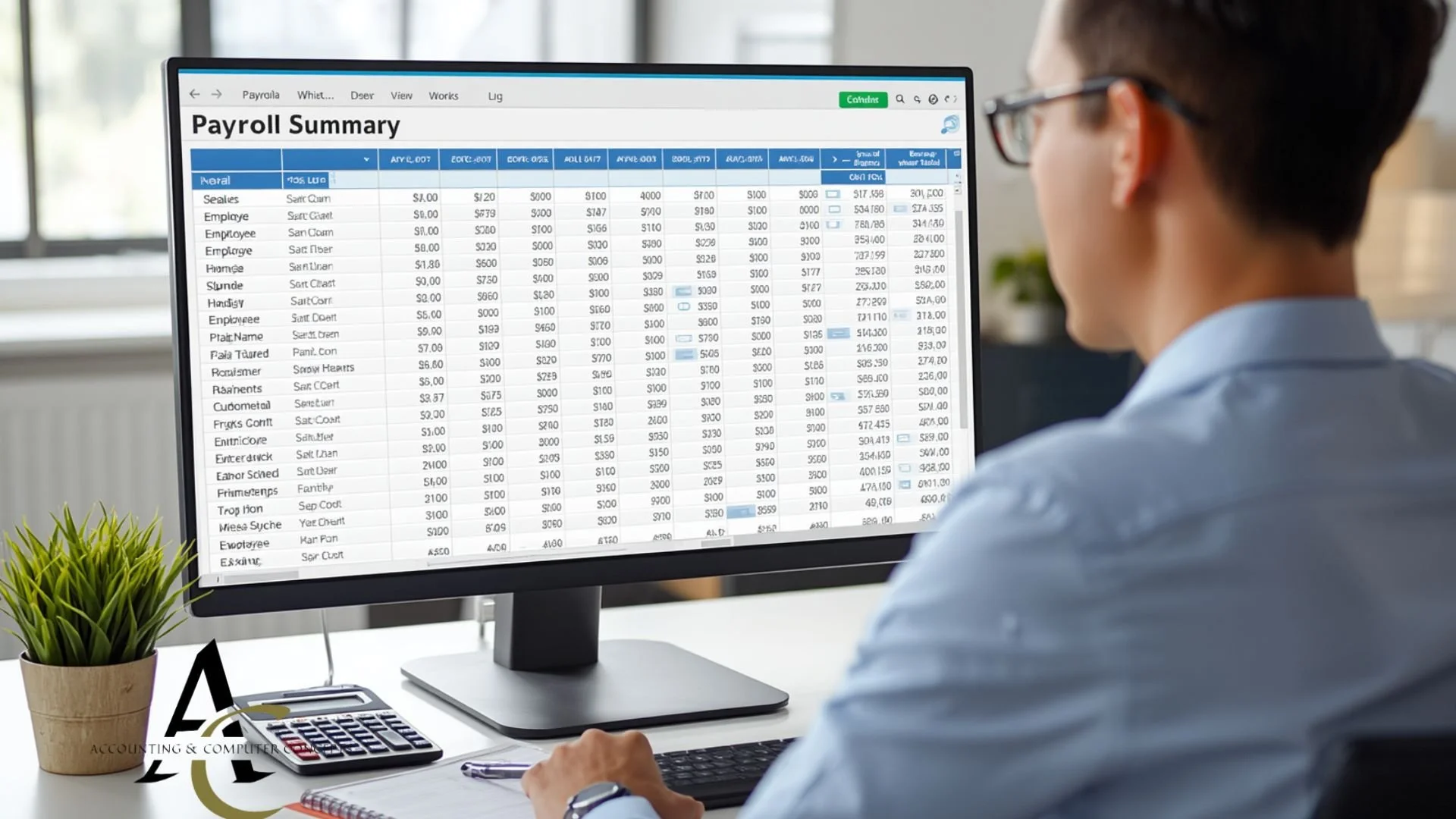
If you have employees, your monthly payroll review is non-negotiable. Payroll errors are among the most expensive and most compliance-sensitive mistakes in small business.
What to look for:
Confirm payroll was processed correctly and on time
Verify all payroll tax deposits were made on schedule
Review any changes in hours, rates, or classifications from the prior month
Confirm Form 941 quarterly deadlines are on your radar
Review year-to-date totals for each employee for accuracy
Why it matters: Payroll tax penalties are swift, significant, and unforgiving. A monthly review ensures that nothing falls through the cracks between quarterly filings.
✅ 8. Estimate and Set Aside Quarterly Estimated Taxes
If you are self-employed or your business makes quarterly estimated tax payments, your monthly review is the right time to revisit your year-to-date income and make sure you're setting aside enough.
What to look for:
Year-to-date net income compared to last year
Whether your current estimated tax payments are on track to cover your liability
Whether a strong month should prompt you to increase your set-aside
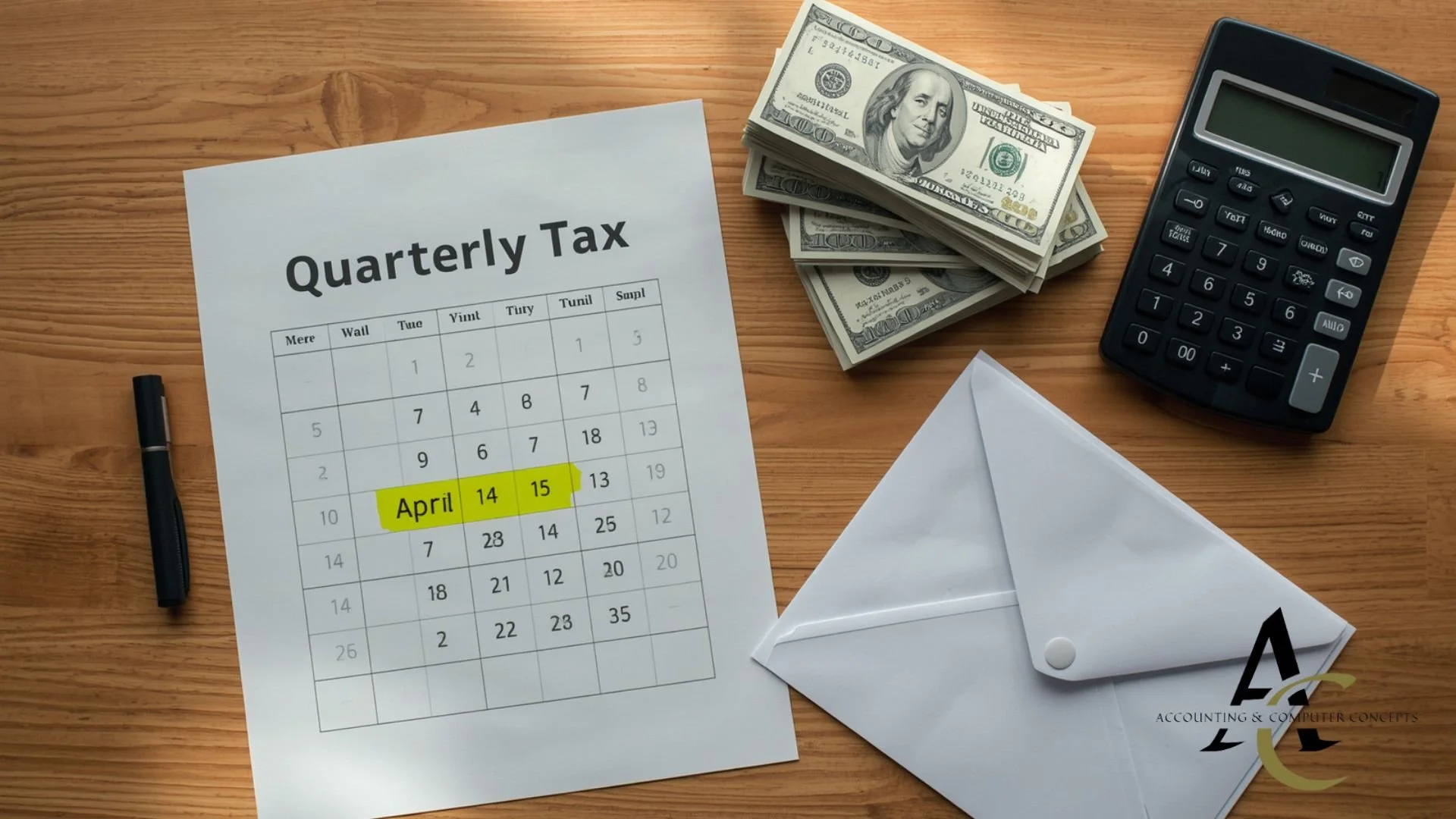
Upcoming estimated tax deadlines — April 15, June 16, September 15, January 15
Why it matters: Underpayment penalties from the IRS are avoidable. A monthly check-in on your tax position means you're never shocked by a large bill in April — because you've been preparing for it all year.
✅ 9. Review Key Financial Ratios
You don't need to be a financial analyst to track a few key numbers that tell you a great deal about the health of your business. Once a month, check these:
Gross Profit Margin: Revenue minus cost of goods sold, divided by revenue. Is it consistent? Is it shrinking? Shrinking margins are an early warning sign worth investigating.
Current Ratio: Current assets divided by current liabilities. A ratio above 1.0 means you have more liquid assets than short-term obligations. Below 1.0 deserves attention.
Accounts Receivable Days: Average receivables divided by average daily revenue. This tells you how long it's taking to collect what you're owed. A rising number means collections are slowing — a warning sign worth addressing.
Why it matters: These ratios are the vital signs of your business. Checking them monthly means you see trends developing — not fully formed crises.
✅ 10. Do a 30-Day Forward Look

The last item on your monthly checklist is the most forward-looking — and arguably the most valuable. Before you close your review, look ahead 30 days.
Ask yourself:
What large expenses are coming in the next 30 days — and is my cash position ready for them?
Are there invoices I need to send this week to ensure payment arrives before bills are due?
Are there any contracts, subscriptions, or renewals coming up that deserve a review?
Is there anything on the horizon — a slow season, a large purchase, a tax deadline — that I should be preparing for now?
Why it matters: Reactive financial management is exhausting and expensive. Proactive financial management — even looking just 30 days ahead — puts you in control. And control, in business, is worth an extraordinary amount.
The Difference Between Knowing and Not Knowing
I've sat across from business owners at both ends of this spectrum. The ones who do this work consistently — or who have someone doing it alongside them — carry themselves differently. They answer questions about their business with confidence. They make decisions with clarity. They sleep better.
The ones who don't live with a background level of financial anxiety that never fully resolves — because the unknown is always more frightening than the known, even when the known is hard.
This checklist is not just accounting work. It is the discipline of knowing. And knowing — really knowing where your business stands — is one of the most powerful competitive advantages you can have as a business owner.
You were built to lead your business well. This checklist helps you do exactly that.
And if the honest truth is that you don't have the time, the tools, or the expertise to do this consistently every month — that is exactly what we are here for.
At Accounting & Computer Concepts, we do this work for our clients every single month — reconciling, reviewing, reporting, and flagging — so that you walk into every month with a clear picture of where your business stands and what it needs.
You focus on building. We'll handle the numbers.
👉 Schedule a free consultation — we'll do this for you every month.