
What Your Profit & Loss Statement Is Actually Telling You

I've sat across from business owners who were working harder than ever — long hours, loyal customers, steady revenue — and yet something felt off. The money coming in never quite seemed to match the peace of mind they were hoping for.
When I'd ask, "Have you looked at your Profit & Loss statement lately?" the answer was almost always the same: a nervous laugh and something like, "I leave that for my accountant."
Here's the truth I want to share with you today: your Profit & Loss statement — your P&L — is not just a document for tax season. It is the financial story of your business. And if you've never learned to read it, you've been making decisions without the full picture.
Let's change that. Together.
What Is a P&L Statement, Really?
At its core, a Profit & Loss statement answers one simple question: Is your business actually making money?
It tracks every dollar your business earned and every dollar it spent over a specific period of time — a month, a quarter, or a year — and shows you what's left over at the end. That leftover number is either your net profit or your net loss.
Think of it like a scorecard for your business. Not the score of a single play, but the score of the whole game. It tells you not just whether you won or lost — but how and why.
The Four Lines That Matter Most
A typical P&L flows from the top down, and understanding each section is simpler than you might think:
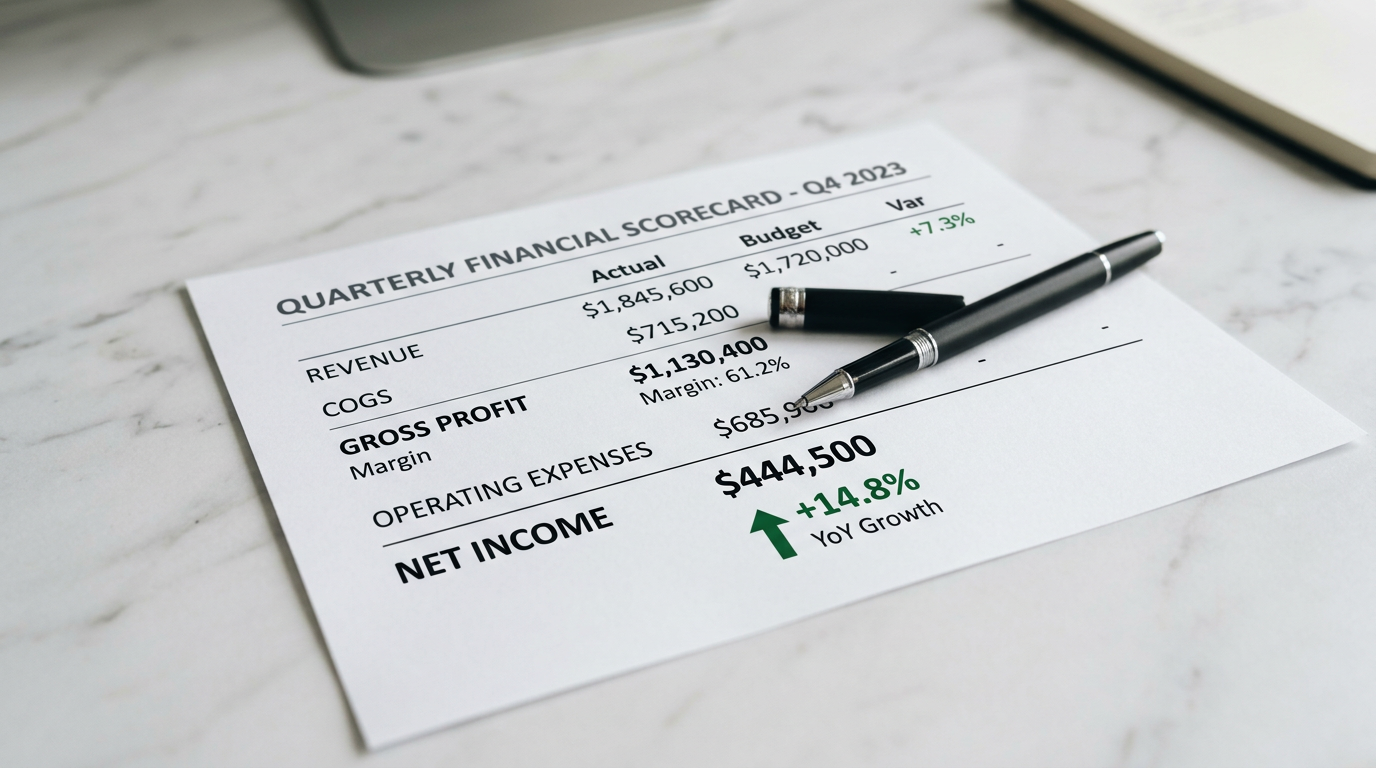
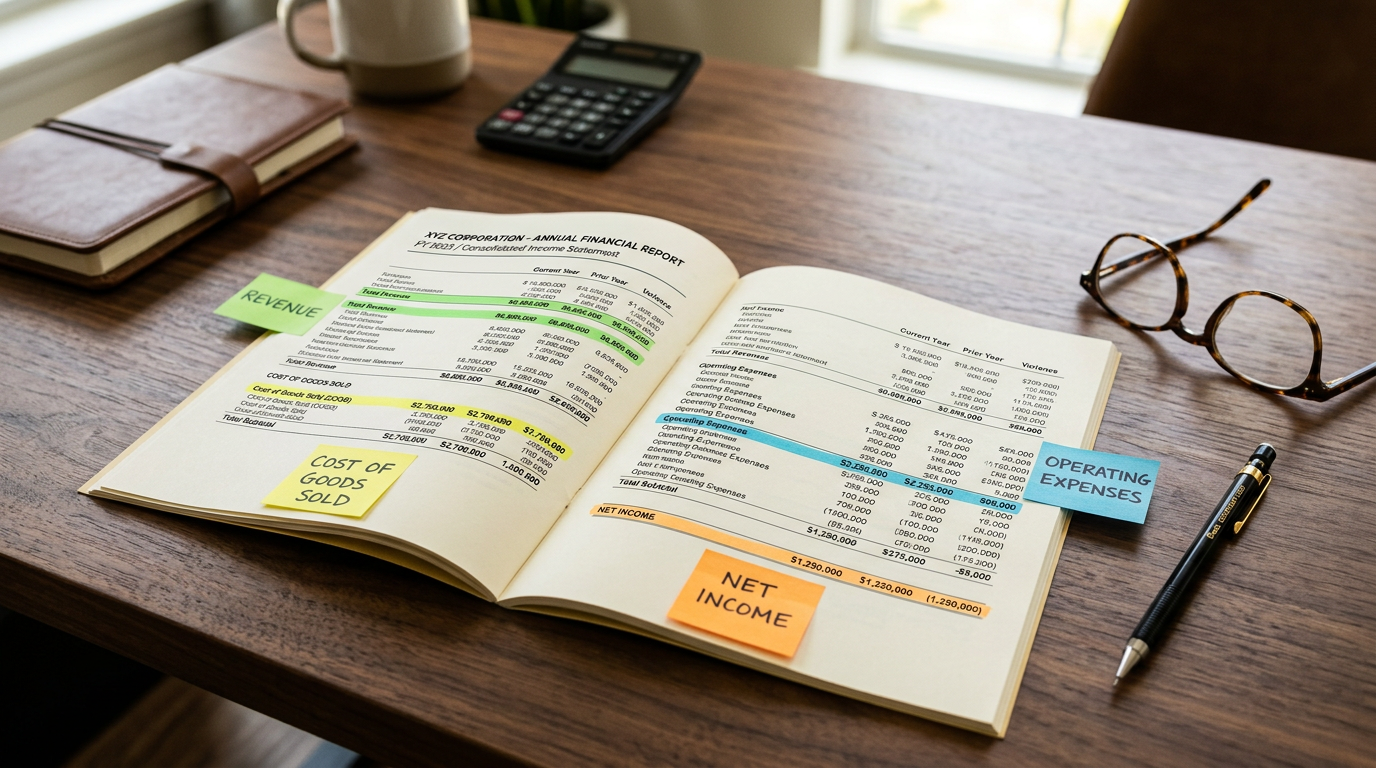
Revenue — The total income your business earned from sales and services. This is your "top line." It tells you whether your business is generating income and whether that number is growing over time.
Cost of Goods Sold (COGS) — The direct costs of delivering your product or service — materials, labor, and so on. Subtract this from revenue and you get your Gross Profit.
Operating Expenses — Your fixed costs of running the business: rent, utilities, payroll, software, insurance. Subtract these from Gross Profit and you get your Operating Income.
Net Income — The "bottom line." After all expenses, interest, and taxes are accounted for, this is what your business actually kept.
Here's the simple formula that ties it all together:
Revenue−Expenses=Net Profit (or Loss)
The Number Most Business Owners Miss
Most business owners glance at two numbers: revenue at the top and net income at the bottom. But the two numbers that tell you the most about the health of your business are hiding in the middle — your gross margin and your operating margin.
Here's how to calculate them:
Gross Margin % = Gross Profit/Revenue
Operating Margin %=Operating Income/Revenue
Track these month over month. A shrinking gross margin usually means you have a pricing or cost problem. A shrinking operating margin — even when gross margin is stable — usually means your overhead is growing faster than your revenue. These are the early warning signals that most business owners miss until the problem has already grown large.
Profitable on Paper — But Broke in Real Life?
This is where I have to share one of the most important financial truths for any business owner: you can show a profit on your P&L and still run out of cash.
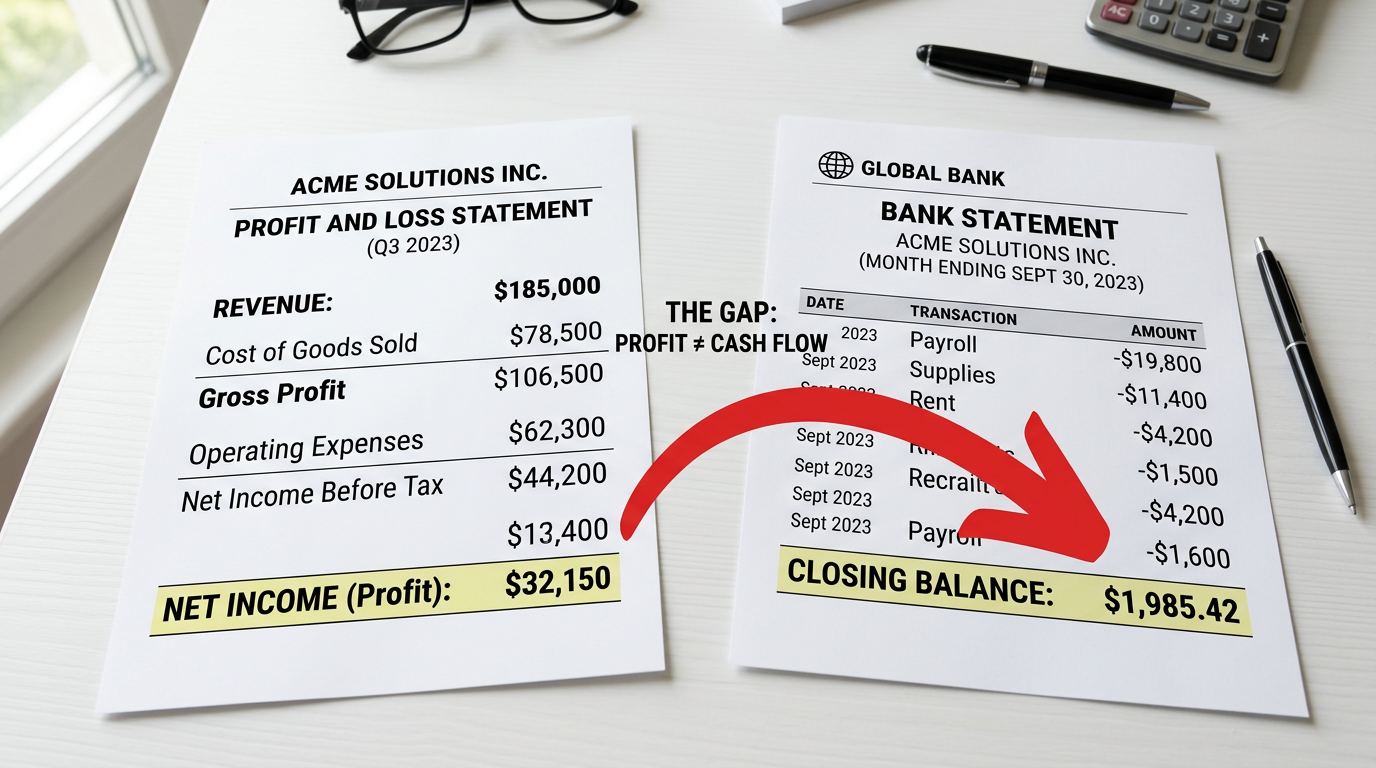
How? Your P&L records income when it is earned — but if your customers haven't paid yet, that money isn't in your bank account. Meanwhile, your bills are very real and very due. This gap between what you've earned and what you've actually received is what trips up so many otherwise healthy businesses.
That's why your P&L must always be read alongside your Cash Flow Statement — which tracks the actual movement of dollars in and out of your business. Together, these two reports give you the full picture. One without the other is like reading only half of a map.
Three Questions to Ask Every Month
You don't have to be a financial expert to get value from your P&L. You just have to ask the right questions consistently:
Is my revenue growing, shrinking, or flat compared to last month and last year? Trends matter more than single data points.
Are my expenses growing faster than my revenue? If so, where? This is where cost leaks hide.
Is my net income moving in the right direction? If not, is it a revenue problem, an expense problem — or both?
These three questions, asked faithfully every month, will do more for the long-term health of your business than any single financial decision you'll ever make.
Your Numbers Are Telling You Something
I've always believed that good stewardship begins with awareness. You can't manage what you don't measure. You can't lead what you don't understand.

Your P&L statement is not a document to be feared or filed away. It is a gift — a window into the financial truth of the business you've worked so hard to build. The business owner who learns to read it, understand it, and act on it is the one who leads with confidence instead of anxiety.
And if those numbers feel like a foreign language right now? That's okay. That's exactly what we're here for.
At Accounting & Computer Concepts, we don't just handle your books — we help you understand them. We'll walk through your P&L with you, explain what it's saying in plain English, and help you make decisions that move your business forward.
👉 Let's decode your P&L together — schedule a free consultation today.