
Why Contractors Run Out of Cash Even When Profitable (And How to Fix It)

Staying on top of cash flow starts with checking the numbers as often as you check the job site.
Many contractors stare at a profit and loss statement that shows a healthy net income, then check their bank account and wonder where all the money went. This disconnect between "profitable on paper" and "broke in the bank" is one of the most common — and most dangerous — problems in the construction industry.
The Profit-Cash Disconnect
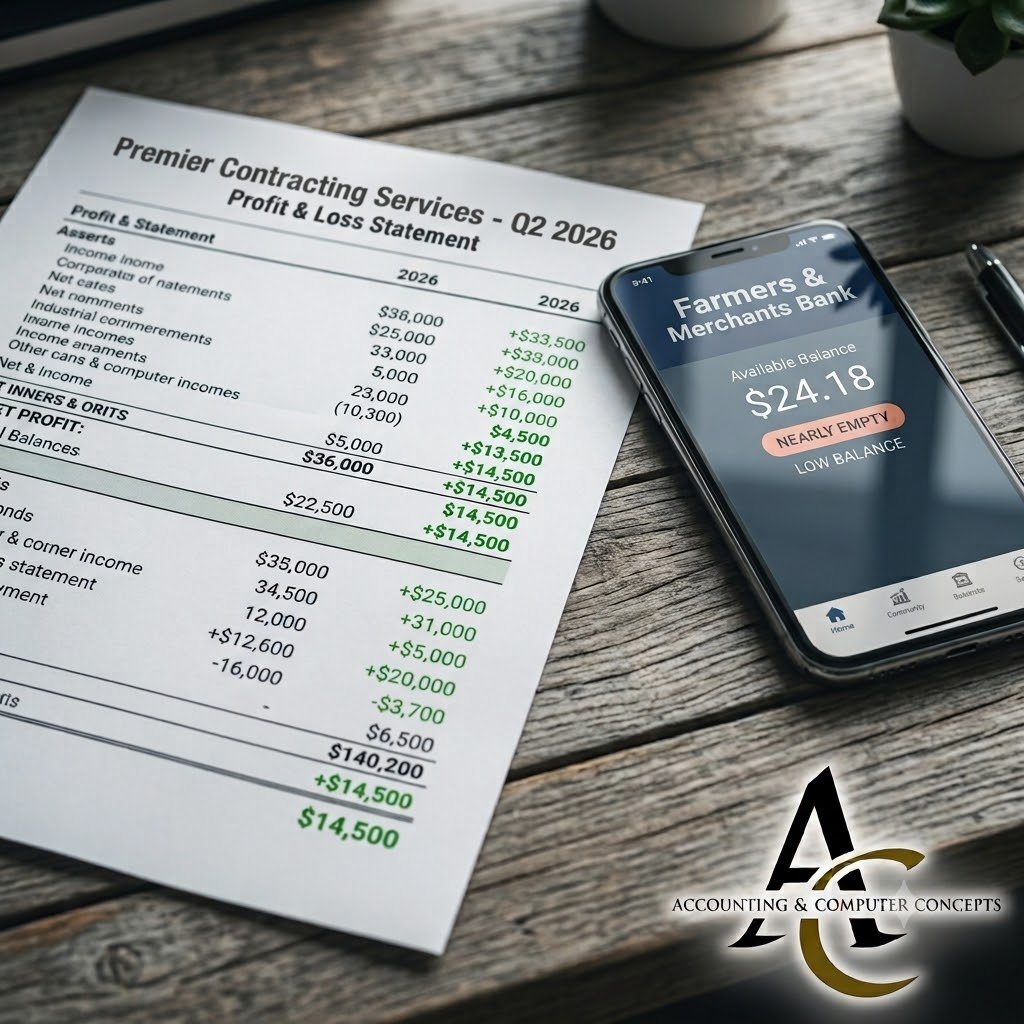
A profitable P&L doesn't always mean money in the bank — timing is everything
Profit and cash are not the same thing, but most contractors treat them as if they were. Your P&L recognizes revenue when it's earned, not when it's actually collected, which means you can show a profitable month while your bank account tells a completely different story.
This gap shows up because construction accounting runs on accrual-based recognition (percentage of completion, billed vs. earned) while your bills, payroll, and material costs demand cash right now. A job can be 100% profitable in your books and still starve your business of cash for 60-90 days while you wait to get paid.
The Real Culprits Behind the Cash Crunch
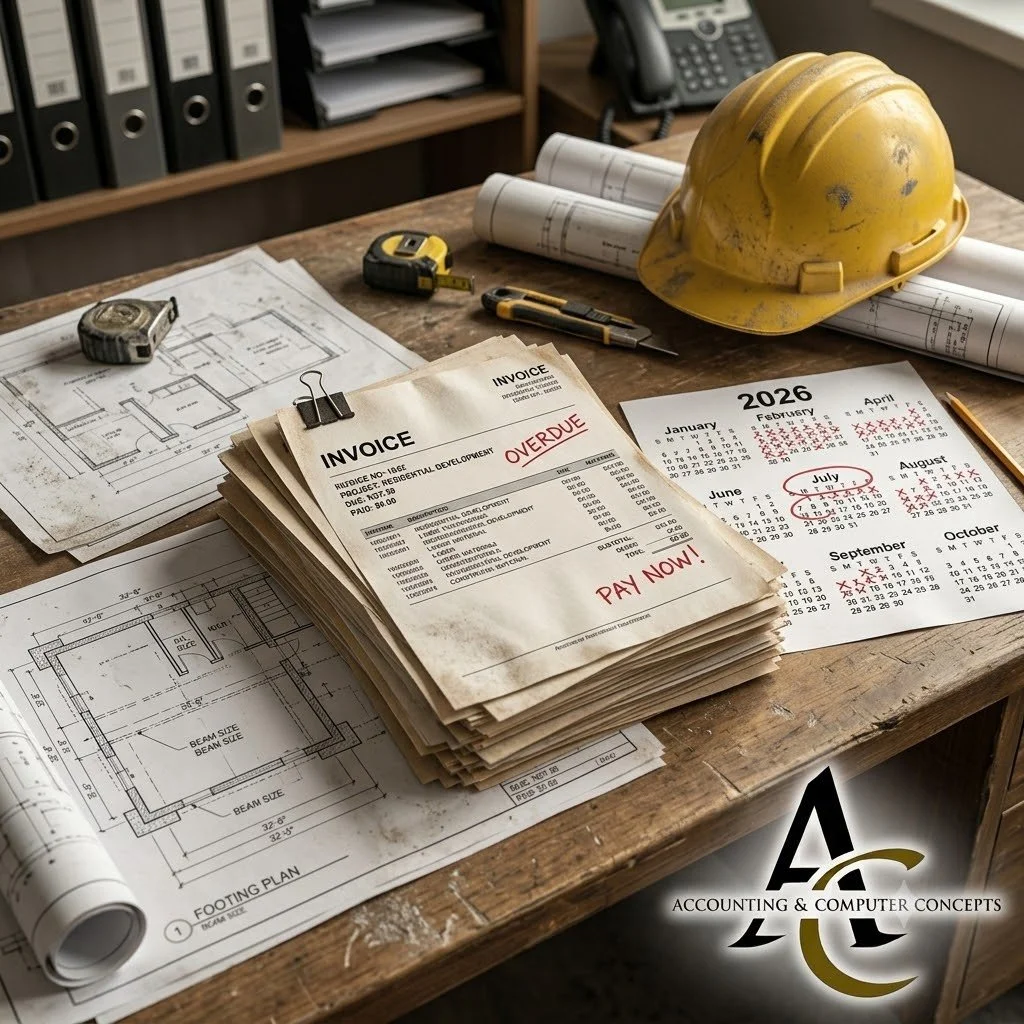
Retainage and slow-paying clients can quietly stall cash flow for months.
Several structural issues in how construction businesses operate create this gap between profit and available cash:
Retainage held back — Typically 5-10% of every invoice sits with the client until project completion, sometimes for months after the work is done and costs are paid.
Front-loaded costs — Materials, labor, and subcontractor payments often hit before you've billed for that phase of work, creating a timing mismatch
Slow-paying clients — Net-30 terms routinely stretch to net-60 or net-90 in practice, especially with general contractors or public projects
Growth outpacing cash reserves — Taking on bigger or more jobs means fronting more cash for materials and labor before collecting a dime
Change orders in limbo — Work performed but not yet formally approved or billed sits as unrecognized cash flow
Overhead misallocation — Fixed costs (equipment, office, insurance) get spread across jobs in ways that don't match when the cash actually leaves your account
How to Fix It
Build a Cash Flow Forecast, Not Just a Budget

A weekly cash flow forecast gives contractors time to react before a shortfall hits
A budget tells you what you expect to earn and spend over a project; a cash flow forecast tells you when money actually moves in and out week by week. Reviewing this weekly — not monthly — lets you spot a coming shortfall while you still have time to react.
Bill Aggressively and Accurately
Progress billing should happen as soon as a milestone is reached, not weeks later. Make sure your billing schedule matches your actual cost curve so you're never carrying more unbilled work than you can afford.
Negotiate Retainage and Payment Terms Upfront

Better payment terms start at the negotiating table, not after the job begins.
Every point of retainage you can shave off, or every net-60 you can convert to net-30, directly improves your cash position. This is a negotiation that happens at contract signing, not after the job is underway.
Separate Job Cash Flow from Overall Cash Flow
Track cash flow at the individual job level, not just company-wide. A single underfunded job can quietly drain cash that other profitable jobs are generating, and you won't see it unless you're looking job-by-job.

Mobilization funding helps contractors cover costs before the first payment arrives.
Use Financing Strategically, Not Reactively
Tools like mobilization funding or a line of credit exist specifically to bridge the gap between spending on a job and getting paid for it. Used proactively — before you're desperate — these tools smooth out timing gaps without the panic of scrambling for payroll.
Get Weekly Financial Reports, Not Just Monthly Ones

Weekly financial reviews catch cash flow problems while there's still time to fix them.
Monthly financials tell you what already happened; by the time you see a monthly cash shortfall, it's often too late to fix it that cycle. Weekly reporting gives you enough lead time to adjust billing, collections, or spending before a crisis hits.
The Bottom Line
Profitability is necessary but not sufficient — a construction business needs disciplined cash flow management running in parallel with strong job costing to actually survive and grow. The contractors who avoid cash crunches aren't necessarily the most profitable ones; they're the ones who track cash with the same rigor they track profit.