
Good Debt vs. Bad Debt: What Every Business Owner Should Know
Let’s talk about a word that makes a lot of business owners uncomfortable.
Debt.
For some of you, just seeing that word brings a familiar heaviness. Maybe it's the credit card you used to make payroll last November. Maybe it's the merchant cash advance you took out in a tight quarter and have been paying back at an eye-watering rate ever since. Maybe it's a loan you took years ago that still shows up every month like an uninvited guest.
For others, debt has been a tool — something that helped you buy a building, upgrade equipment, or hire the team that took your business to the next level.
Both of those experiences are real. And they point to a truth that most financial conversations skip over entirely:
Not all debt is the same.*
Some debt builds your future. Some debt borrows from it. And knowing the difference may be the most important financial distinction you make as a business owner.
The Simple Definition
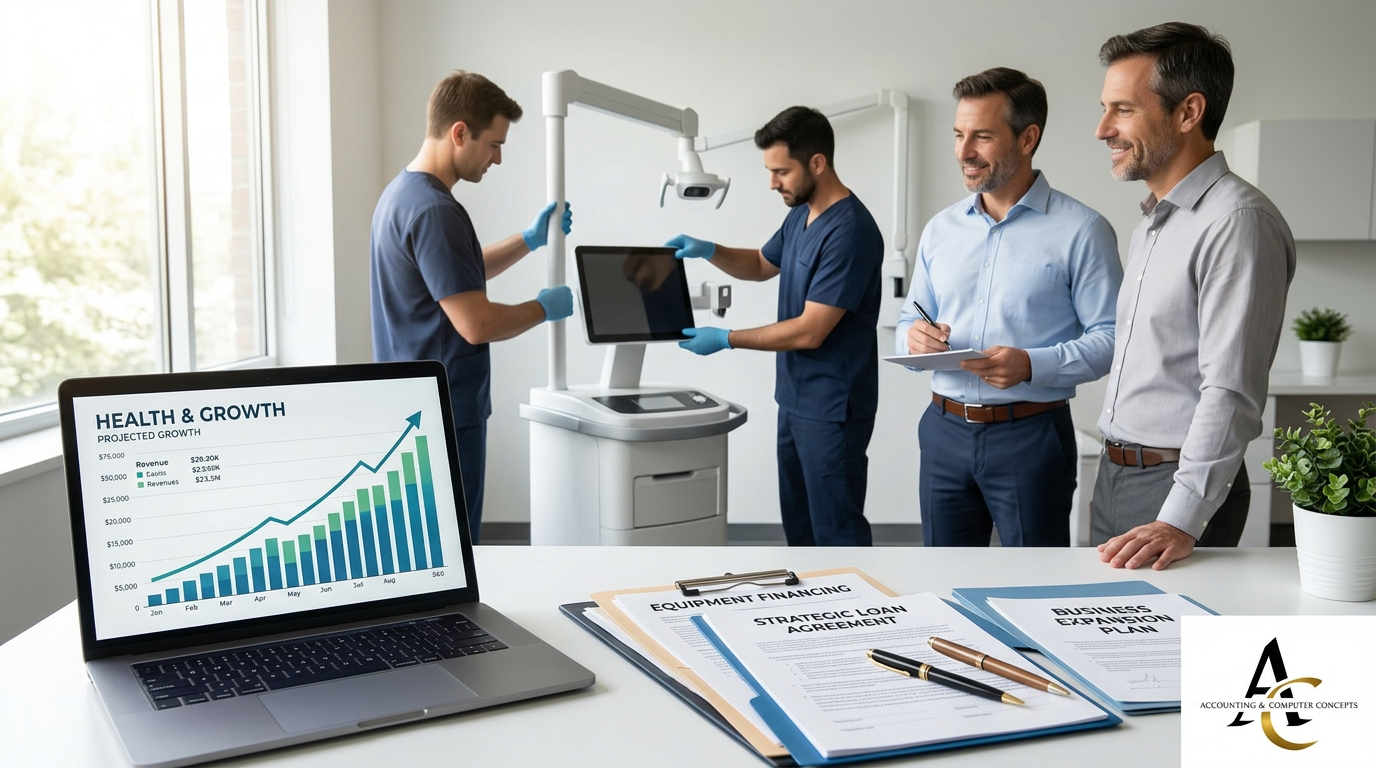
At its core, the difference between good debt and bad debt comes down to one question: does this borrowing make me more financially strong over time, or less?
Good debt generates a return that exceeds its cost. It puts money back into your pocket — either by increasing your revenue, reducing your expenses, or building an asset that grows in value. It typically comes with fixed, predictable interest rates, manageable payments that fit within your cash flow, and a clear path to a return on investment.
Bad debt, on the other hand, adds an obligation without adding value. It takes money from your pocket rather than returning it. It often carries high or variable interest rates, short repayment windows, and it typically finances expenses that don't generate future income — or worse, it covers losses that point to a deeper problem that borrowing will only delay.
As one attorney who works with business owners put it simply: "Good debt returns money to your pocket, but bad debt takes money from your pocket."
Examples of Good Debt

Let me give you concrete examples — because this is where it gets practical.
An equipment loan that expands your capacity. If you run a service business and take out a loan to purchase a vehicle or equipment that allows you to take on more clients, the revenue that equipment generates should far exceed what you pay in interest. That's good debt — it's working for you.
A commercial real estate loan. Purchasing the building your business operates out of means your monthly payment is building equity rather than paying someone else's mortgage. The asset appreciates over time, and you own something of lasting value.
A business line of credit used for strategic inventory. If you know with confidence that a seasonal inventory purchase will sell quickly at strong margin, using a line of credit to fund it — and paying it back promptly — is a disciplined, productive use of borrowed capital.
An SBA loan for growth. Small Business Administration loans typically offer low rates and long repayment terms, making them one of the most favorable financing tools available to small business owners who qualify.
Investment in technology or systems. Borrowing to implement software, automation, or infrastructure that reduces labor costs or improves efficiency can pay dividends for years. The key is that the return must exceed the cost.
Examples of Bad Debt
Now let's talk about the other kind — and I want to do this with grace, because many of these situations come from desperation, not carelessness.
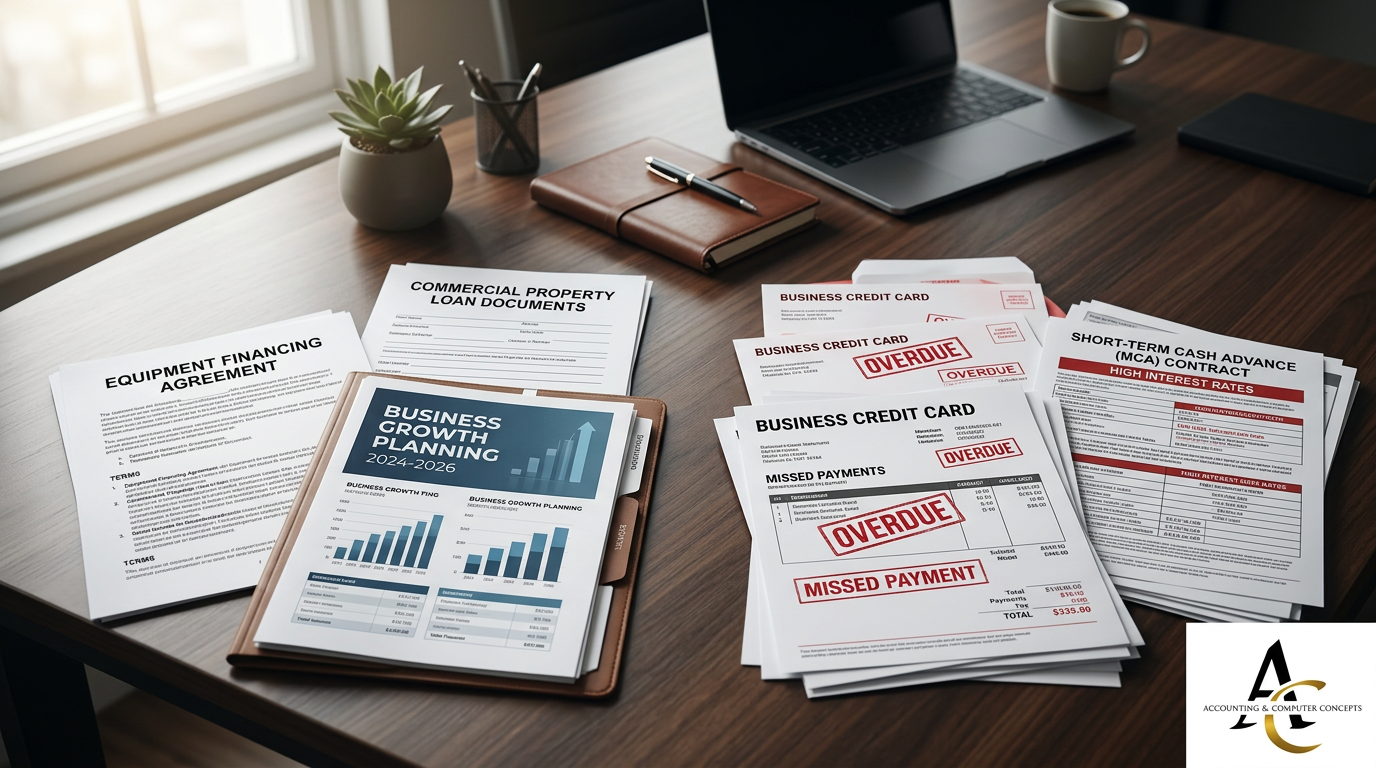
High-interest credit cards used to cover operating expenses. Using revolving credit to pay vendors, make payroll, or cover recurring costs is one of the most common forms of bad debt in small business. It solves a short-term problem at a long-term cost — often with interest rates well above 20%.
Merchant cash advances (MCAs). These products advance you a lump sum in exchange for a percentage of your future daily sales — often at effective annual rates between 40% and 150%. They are fast, easy to access, and one of the most expensive forms of financing available. They are almost always reactive decisions made in moments of cash crisis.
Payday-style business loans. Short-term, high-fee, high-rate loans that must be repaid within weeks can solve a crisis and create a bigger one — because now your cash flow has to absorb the repayments on top of everything else it was already struggling to cover.
Borrowing to fund losses. Perhaps the most important warning sign: if you find yourself taking out loans simply to keep the business alive quarter to quarter — not to grow, not to invest, but to survive — that is a signal that the underlying business model or cash flow structure needs attention, not more borrowed money. Debt can delay the conversation, but it cannot replace it.
The Key Question Before You Borrow
Before taking on any debt, every business owner should be able to answer this question clearly:
Will the return on this borrowed money — in real dollars — exceed the total cost of the loan, including interest and fees, within a defined time frame?*

If the answer is a clear and confident yes, that is worth exploring. If the answer is "I hope so," "I'm not sure," or "I need this just to keep going" — that deserves a deeper conversation before any signatures happen.
There are also two financial ratios worth knowing:
Debt-Service Coverage Ratio (DSCR): Divide your net operating income by your total annual debt payments. A DSCR below 1.0 means your business does not currently generate enough cash to cover its existing debt obligations — adding more debt at that point is high risk. A DSCR above 1.25 is generally considered healthy by most lenders.
Debt-to-Equity Ratio: Divide your total liabilities by your owner's equity. A high ratio means your business is more reliant on borrowed funds than your own capital — which increases financial risk, particularly in slower seasons or economic uncertainty.
A Thought on Stewardship
I believe every business owner is a steward — of their team, their clients, their community, and yes, their finances. Debt, when used wisely, is not a failure of stewardship. It's a tool.
The Scriptures speak often about the weight of financial obligation — and about the wisdom of counting the cost before building. That principle applies beautifully here. Not every loan is a burden, and not every borrowing decision is reckless. But every single one deserves honest, clear-eyed evaluation before you sign.
The business owners I've seen navigate debt well are the ones who treat it intentionally — who borrow for defined purposes, with a clear repayment plan, and who stay close to their numbers so they always know where they stand.
That kind of financial clarity is not reserved for big companies with CFOs. It is available to every small business owner who chooses to pursue it.
Here's a question most business owners have never been asked: If your revenue dropped by 30% tomorrow, could your business still cover its debt payments? That one question is at the heart of the Business Debt Danger Score — a free assessment I created specifically for small business owners who want to know the truth about their debt before it becomes a problem. It takes less than five minutes, it's completely free, and it may be the most honest financial conversation you have all year.
👉 Download the Business Debt Danger Score Assessment
And that's exactly what we help you do. At Accounting & Computer Concepts, we help small business owners understand their financial picture — including their debt — with clarity and confidence, not confusion or shame.
👉 Talk to a financial pro — schedule a free consultation today.